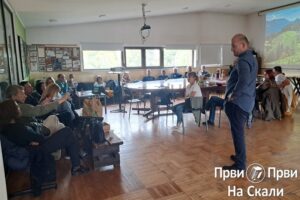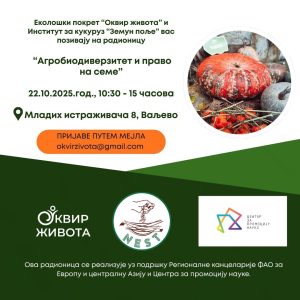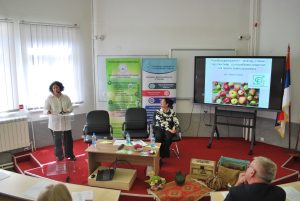
The third, final gathering “Agrobiodiversity and The Right to Seeds”, after Prokuplje and Valjevo, was held in Belgrade in the organization of the Ecological Movement “Frame of Life”, with the aim of further developing the newly formed network for plant genetic resources in Serbia.
The gathering is part of the project “Strengthening the capacity of local communities to preserve biodiversity and traditional knowledge”, which is implemented with the support of the FAO Regional Office for Europe and Central Asia (FAO REU), at the Food and Agriculture Organization of the United Nations.
After the welcome speech, Ivana Radović, Ph.D., creator of the project and representative of the “Frame of Life”, pointed out that agricultural producers need the support of researchers, the media, decision-makers, and even the general public, in order to solve problems at the institutional level, through legal regulations.
- When the producer claims that the old variety is of better quality, the scientist must prove it, so that it is based on facts, which, among other things, is also the purpose of such a network, with a two-way exchange of knowledge, in which the farmer has a significant role, emphasized Radović.
With this approach, the rights of farmers are also strengthened.
- Not enough is said about who is the holder of the rights to old varieties. According to the International treaty on Plant Genetic Resources for Food and Agriculture, which is a legally binding document ratified in Serbia, it is the local community. This is also important for the economic survival of rural farms, for which even one hectare of arable land is enough for growing old varieties, said Radović.
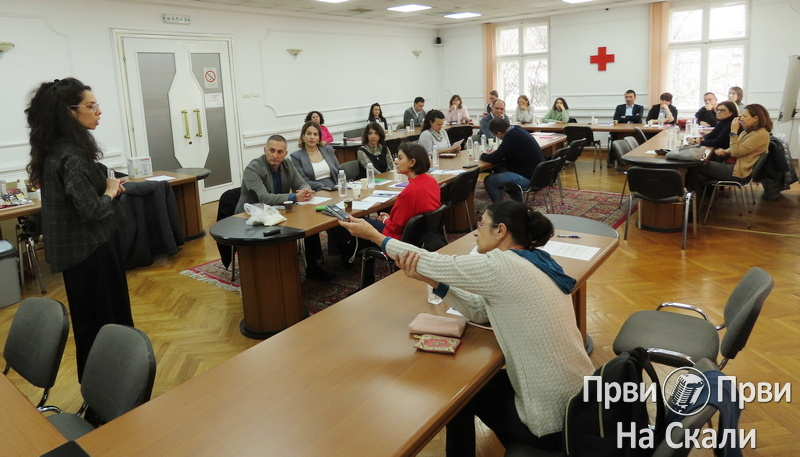
This project is small, but very significant, said Aleksandar Mentov, national coordinator of the FAO program whose office in Serbia was opened in 2001.
- The project supports the fulfillment of part of the goals of FAO’s strategic priorities, such as the resilience of agriculture to climate change and the sustainable management of natural resources. They are essential for the preservation of what we have in Serbia, which is real wealth, said Mentov.
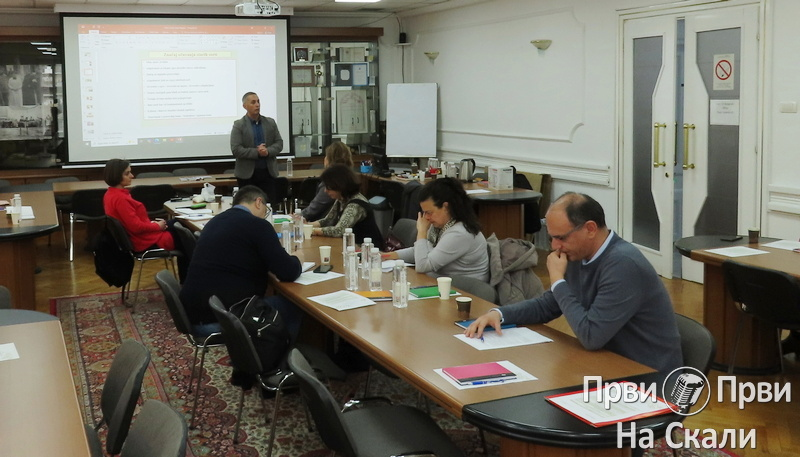
In front of the Ministry of Agriculture, Forestry and Water Management, Prof. Dr. Tatjana Brankov, special advisor to the minister, expressed support to this initiative, as important for the state.
- It is one of the segments of preserving our food sovereignty. This is a great initiative that is also aimed at strengthening the awareness of the citizens of Serbia about an extremely important topic that is also important in the context of major geopolitical challenges. Seeds are a significant source of genetic variability, Brankov said.
In addition to people who save seeds in fields and gardens, there are serious national gene collections, local banks, and for further support of the state, administrative procedures are planned to be changed in order to simplify them.
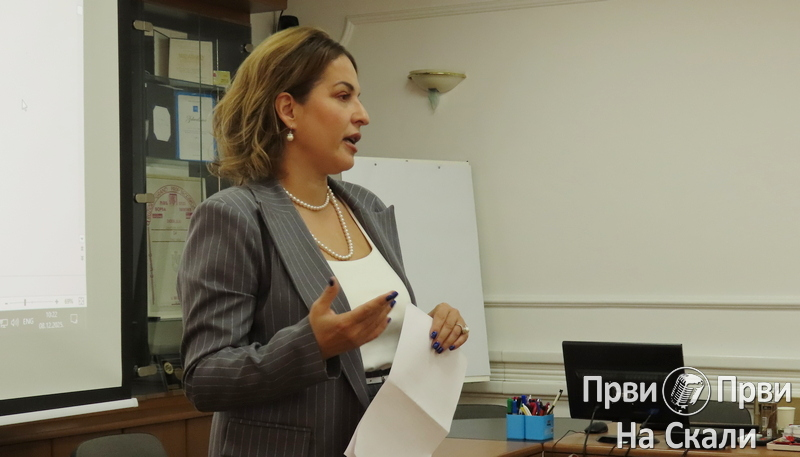
The lecture was given by prof. Dr. Zora Dajić Stevanović from the Faculty of Agriculture, University of Belgrade.
- That sentiment can also be the renaissance of growing some plants that we have forgotten. When you last ate mulberries or saw them in nature, industrial hemp as a nutritional value was widespread, and you may never have seen rhubarb or gooseberries. Many plants are beautiful as food, so they should be given special attention. Ethnolocal gastronomy, even molecular cuisine, can be linked to these resources. This is important for visitors who would like to try something authentic from here, to hear a beautiful story, a song. This can be connected with the concept of sustainability through use, and new technology should be used to preserve the old, emphasized Dajić Stevanović.
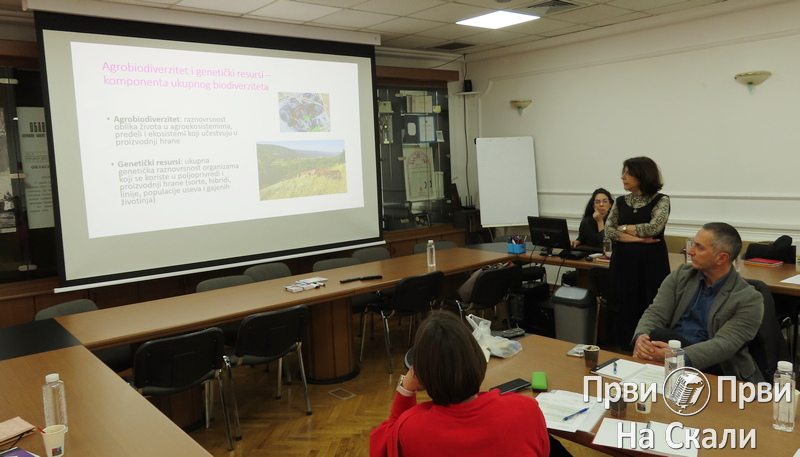
This was followed by the presentation of the results of the work of the two working groups of the project.
On behalf of the researchers of the network for plant genetic resources, Dr. Sanja Mikić from the Institute of Field and Vegetable Crops Novi Sad presented the results, and the results of the work of agricultural producers of this network were presented by Miloš Đorđević from the household “Dražića polje” in Šutci.
A more detailed presentation of these activities follows in the next article on the PRVI PRVI NA SKALA portal.
In the final part of the meeting, a workshop was held in which all participants contributed, a discussion was held on project topics, road maps were validated and an agreement was made for activities in 2026.
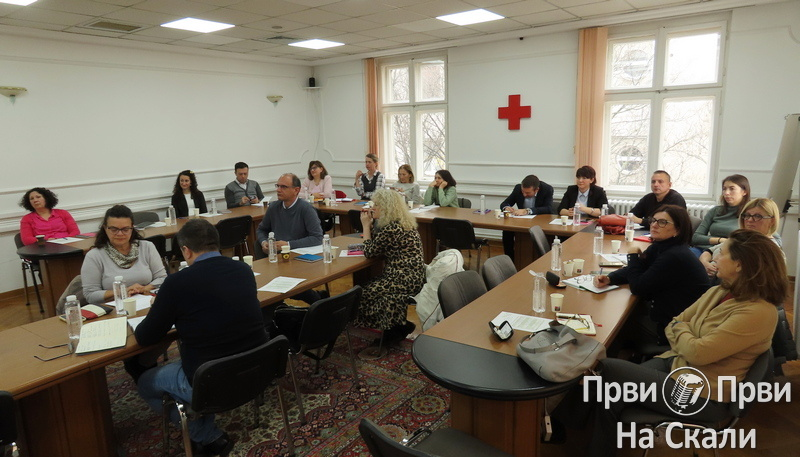
The ambition of the network is to develop this collective mission in the coming decades, which is what “Frame of Life” has strategically decided to do.
Among the participants of the meeting were professors, experts, employees of institutions, agricultural producers, gardeners, plant nurseries, media.
The partner of EP “Frame of life” in the implementation of the project is the PRVI PRVI NA SKALI portal.
Author of the text: D.M.M.
Source of the text and photographs: ПРВИ ПРВИ НА СКАЛИ